What is Laser Eye Surgery?
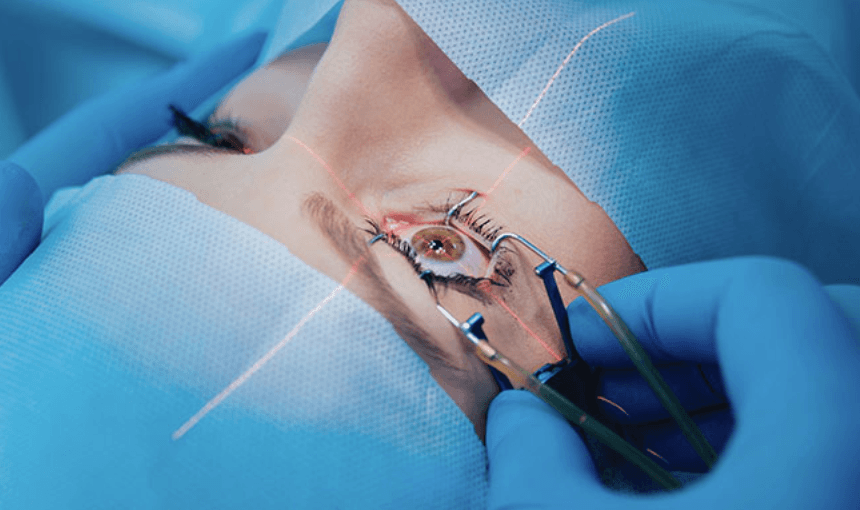
Laser eye surgery, also called laser vision correction or refractive surgery, uses a cool ultraviolet laser to reshape the cornea, the clear front window of the eye. By changing the curvature of the cornea by a tiny, precisely calculated amount, light is focused correctly on the retina, correcting short sight, long sight and astigmatism.
It is designed to reduce or eliminate dependence on glasses and contact lenses. It does not treat cataract, and it does not stop age-related reading difficulty (presbyopia) that develops around 40.
Vision Problems That Laser Surgery Can Correct
- Myopia (short-sightedness): distant objects look blurry
- Hyperopia (long-sightedness): near, and sometimes distant, objects look blurry
- Astigmatism: vision is blurred or distorted at all distances because of an unevenly curved cornea
Types of Laser Eye Surgery Available
There is no single "best" procedure for everyone. Each option has strengths, and your eyes determine which is appropriate.
1
Blade-Free LASIK (Femto-LASIK) - A femtosecond laser creates a thin corneal flap without a blade, and an excimer laser then reshapes the underlying tissue. The flap is repositioned, where it heals naturally without stitches.
2
Advantages: quick procedure, minimal discomfort and fast visual recovery, often within 24 to 48 hours
3
Best suited for: healthy corneas with adequate thickness and a stable prescription
4
Contoura Vision (Topography-Guided LASIK) - Instead of treating only your spectacle power, this approach uses a detailed map of your corneal surface to guide the laser, addressing microscopic irregularities unique to your eye.
5
Advantages: a personalised treatment profile that may improve vision quality and reduce night-time glare for suitable patients
6
Best suited for: patients whose corneal mapping qualifies for topography-guided treatment, including many with astigmatism
7
Surface Laser (PRK / ASA) - No flap is created. The laser reshapes the corneal surface directly after the thin outer layer is removed or moved aside, and it regrows naturally.
8
Advantages: no flap-related risks, and often preferred for thinner corneas or people with a very active or contact-sport lifestyle
9
Considerations: recovery is slower and more uncomfortable in the first few days compared with LASIK
10
Other Options When Laser Is Not Suitable - If your corneas are too thin, irregular or your power is too high for laser treatment, an implantable lens (ICL) may be a better choice. Your surgeon will explain alternatives when laser is not the safest path.
What Makes the "Best" Laser Eye Surgery? Seven Things That Matter
If you are comparing centres, focus on these factors rather than advertising claims.
Warning signs: promises of "100% guaranteed 6/6 vision", "no risk", pressure to book on the first visit, a rushed screening or unusually low prices with hidden charges.
1
Thorough Pre-Operative Screening - The most important step happens before the laser is switched on. A proper evaluation includes corneal tomography, corneal thickness, topography, tear film assessment, pupil size, eye pressure and a dilated retinal check. If a centre does not examine your eyes properly, be cautious.
2
The Right Procedure for Your Eyes - A good surgeon recommends the procedure that suits your cornea, not the one that costs the most. They should be willing to say "not suitable" when necessary.
3
Surgeon Experience - Ask about the surgeon's experience with refractive procedures and how they handle complications and enhancements.
4
Modern, Well-Maintained Technology - Both the femtosecond and excimer lasers, and the diagnostic devices, should be properly maintained and calibrated.
5
Safe, Sterile Environment - Strict hygiene, sterilised instruments and a dedicated operation theatre protect against infection.
6
Honest Communication - You should hear about benefits and risks, realistic outcomes and the possibility of needing glasses for some tasks afterward.
7
Aftercare and Follow-Up - Good results depend on aftercare. Ask how many follow-up visits are included and how to reach the team if a concern arises.
Are You a Good Candidate for Laser Eye Surgery?
Generally, you may be suitable if:
- You are at least 18 years old
- Your spectacle power has been stable for at least 12 months
- Your corneas are healthy and thick enough for your prescription
- Your eyes are free of active infection, inflammation or progressive disease
- Your prescription falls within the safe treatable range
- You have realistic expectations
Situations Where Laser Surgery May Not Be Advisable
If you are not a candidate for laser surgery, you may still have excellent alternatives. Your surgeon will guide you.
- Thin, steep or irregular corneas, including suspected keratoconus
- Unstable or changing prescription
- Uncontrolled dry eye
- Pregnancy or breastfeeding
- Certain autoimmune conditions or uncontrolled diabetes
- Active eye disease such as glaucoma or cataract that needs treatment first
- Very high prescriptions beyond safe limits
Pre-Laser Evaluation at Oracle Eye Hospital
Your assessment typically includes:
Contact lens users: stop wearing lenses before the evaluation as advised by your doctor, usually about a week for soft lenses and longer for hard or toric lenses, since lenses temporarily change the shape of the cornea.
- Detailed refraction to confirm your exact prescription and stability
- Corneal tomography (Pentacam) to map the front and back surface of the cornea and screen for early keratoconus
- Corneal topography to plan topography-guided treatment
- Pachymetry to measure corneal thickness
- Tear film and dry eye tests
- Pupil size and eye pressure measurement
- Dilated retinal examination
Step-by-Step Laser Surgery Workflow
1
Step 1: Comprehensive Corneal Evaluation - Detailed scans and tests confirm that your eyes are healthy and suitable for laser correction.
2
Step 2: Personalised Procedure Planning - Your surgeon explains the recommended option, expected results, risks and costs, and answers all your questions.
3
Step 3: Painless Anaesthetic Eye Drops - Numbing drops make the procedure comfortable, with no injections.
4
Step 4: Laser Treatment - The laser reshapes your cornea according to your treatment plan. The laser itself works for only seconds, and the entire procedure takes about 10 minutes per eye including preparation.
5
Step 5: Rest, Examination and Discharge - After a short rest and check-up, most patients go home the same day with eye drops, protective shields and clear instructions.
Recovery After Laser Eye Surgery
First few hours: mild burning, watering and light sensitivity are common. Resting with your eyes closed helps.
First 24 to 48 hours (LASIK / Contoura): vision typically improves noticeably, and many patients resume light screen work and office routines as advised.
After PRK: discomfort and blurred vision are more noticeable for the first few days, and vision improves gradually over days to weeks.
First weeks and months: vision stabilises, and dryness and night glare often settle.
Aftercare essentials:
- Use all prescribed drops exactly as directed
- Do not rub your eyes
- Wear protective shields as advised, especially while sleeping
- Avoid swimming, saunas, dust and eye makeup for the recommended period
- Take regular breaks from screens and use lubricating drops
- Attend every follow-up visit
An Honest Overview
Laser vision correction has a strong safety record in properly selected patients, but all surgery carries some risk. Possible effects include:
Results vary, and no surgeon can guarantee perfect vision or a lifetime free of glasses. Presbyopia will still develop after 40, and some people eventually need reading glasses.
- Dry eyes, usually temporary and manageable with lubricating drops
- Glare, halos and starbursts around lights at night, which often improve with time
- Under-correction or over-correction, sometimes needing an enhancement
- Fluctuating vision in early healing
- Flap-related issues (LASIK only), uncommon with femtosecond technology
- Infection or inflammation, uncommon with proper aftercare
- Corneal ectasia, a rare weakening of the cornea that careful screening aims to prevent
Other Laser Treatments for the Eye
"Laser eye surgery" usually refers to vision correction, but lasers are also used to treat other eye conditions, as advised by your ophthalmologist:
These are different from LASIK and are used for treatment rather than spectacle removal.
- Retinal laser: seals tears and treats leaking or abnormal vessels in diabetic eye disease
- YAG laser capsulotomy: a quick, painless procedure to clear cloudiness that can develop behind the lens implant after cataract surgery
- Laser iridotomy and glaucoma laser: helps manage certain types of glaucoma and angle problems
There is no single price, because the cost depends on:
At Oracle Eye Hospital, you receive a clear, itemised estimate after your evaluation, with no hidden charges. We offer 0% EMI plans and cashless assistance through empanelled healthcare partners. Because vision correction is generally elective, insurance coverage varies by policy, and our team will help you understand your eligibility.
Why Patients in Moradabad Choose Oracle Eye Hospital for Laser Vision Correction
- The type of laser procedure (blade-free LASIK, Contoura Vision or PRK)
- The technology and treatment planning involved
- The complexity of your prescription and corneal profile
- Additional tests, medicines and follow-up
- Experienced refractive team: Dr. Girjesh Kain (MS, FICO) and Dr. Rachana
- Safety-first approach: we advise against surgery when it is not right for you
- Multiple options: blade-free LASIK, topography-guided treatment and surface laser
- Detailed diagnostics: accurate corneal mapping for better planning
- Comfort-focused care: numbing drops, short procedure and same-day discharge
- Honest counselling: realistic expectations and open discussion of risks
- Accessible pricing: transparent estimates, EMI and cashless support
Book Your Laser Eye Surgery Screening Today
If you are tired of glasses and contact lenses, the first step is simply a screening to find out whether laser surgery is right for you. Book a consultation at Oracle Eye Hospital, Moradabad. Call our helpline at +91 8006803111, or visit us for a complete laser vision evaluation. Bring your current glasses and previous prescriptions.